Investors have long understood the business risks that they—and the companies they’re invested in—are exposed to from deforestation and the loss of natural ecosystems to make way for agriculture or development.
While several leading food companies, including Nestlé SA and Danone SA, are proving that cleaning up supply chains is possible, individual corporate policies and due diligence systems alone haven’t been enough to manage these risks.
Now a growing number of companies are participating in collaborative, multi-stakeholder efforts to scale action in key sourcing regions called landscape initiatives.
This report gives investors a practical framework for engaging companies on landscape initiatives: what to look for, what to ask, and how to distinguish credible participation.
What Investors Need to Know About Landscape Initiatives
A Q&A with Ceres’ Karen Mo, Director, Nature Research and Partnerships, Food and Forests
 What is a landscape initiative?
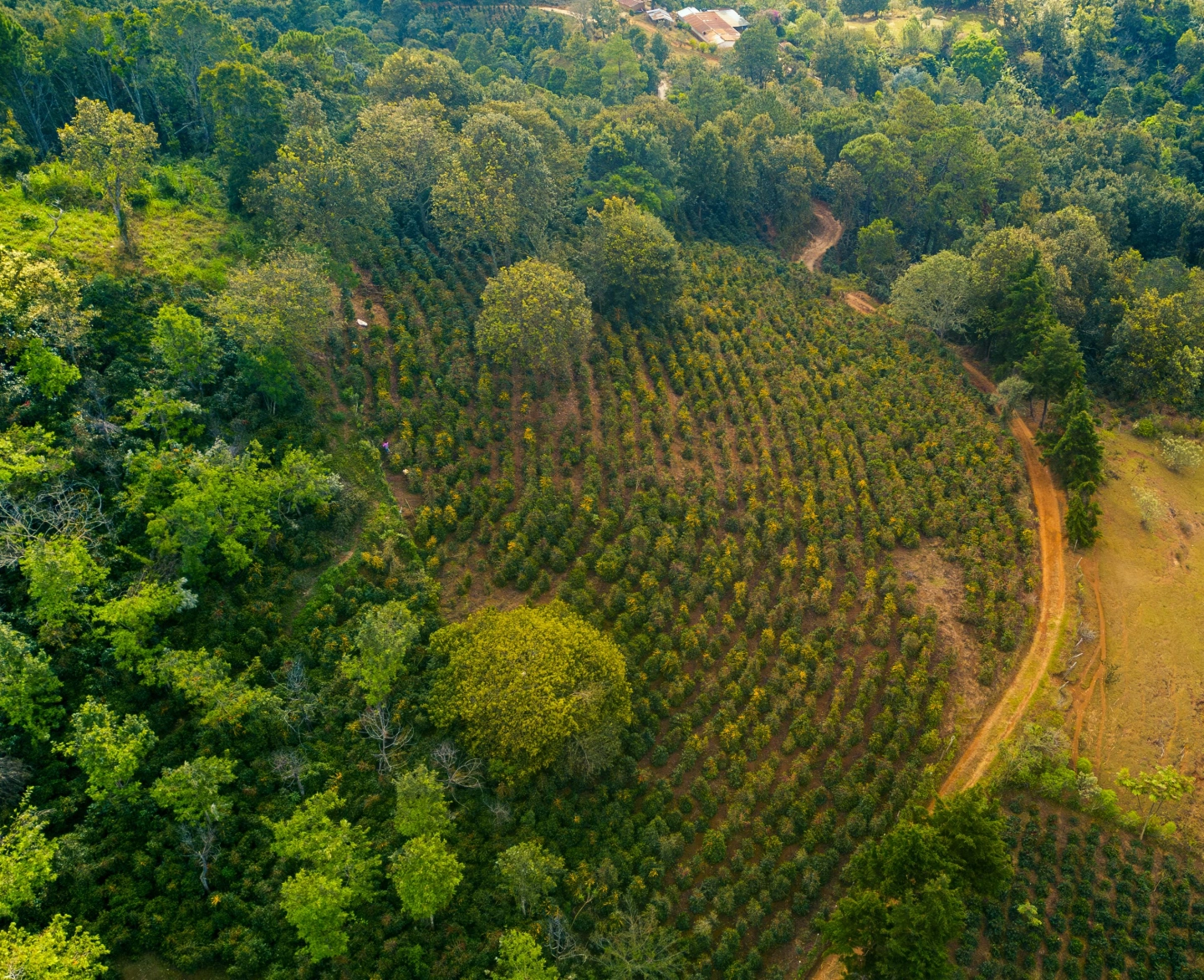
A landscape initiative is a specific kind of place-based approach that companies can use to manage supply chain risk. Through these multi-stakeholder programs, companies work with other companies, organizations, and local partners to address complex and interconnected environmental, economic, and social risks across a certain geographic area.
Landscape initiatives differ from corporate projects on individual farms, mills, or facilities because of their scale, averaging around 127,000 hectares of land. They also happen on land used for crop fields and livestock pastures and can take place within forests and conservation areas.
Landscape initiatives are also referred to as “jurisdictional initiatives” when the landscape is based on political boundaries, and governments are involved.
Why should companies participate in landscape initiatives? How do landscape initiatives help them manage risk from nature loss?
Historically, most companies have looked to target deforestation risks through traceability systems and supplier monitoring programs. While these approaches are extremely important, landscape initiatives give companies an opportunity to go further and reduce their exposure to systemic risks while strengthening long-term supply chain stability.
Research shows that many pressing nature-related risks are beyond what individual companies can control on their own. By bringing together multiple companies, NGOs, government actors, and other groups, companies can leverage outside support to better tackle those risks. Joining landscape-level projects is particularly important when regional forest loss and social conflicts can disrupt operations in major sourcing regions. For example, the report highlights instances where local forest clearing has led to drought and flooding, which decreases crop yields, and where land disputes have threatened production.
How can landscape initiatives improve the resilience of agricultural and forestry supply chains?
Landscape initiatives can increase supply chain resilience by protecting and restoring forests, grasslands, and other natural ecosystems, which businesses depend on to source raw materials, grow food, and transport goods. These crucial environments act as powerful buffers against the impacts of climate change. Safeguarding them can ensure companies have more reliable and stable supply chains.
Many landscape initiatives incorporate activities that are designed to help producers adapt to changing weather patterns and recover from climate-related shocks like droughts. This can mean training farmers on resilient agricultural practices, including agroforestry and cover cropping, introducing new ways for them to generate income and provide financial assistance.
What are a few examples that you highlight in the report of landscape projects that involve companies?
There are many examples of landscape projects in the report, but I’ll highlight two that illustrate how companies are investing in strategic regions and sharing the progress of their efforts.
Mondelēz International, Inc ., one of the world’s largest snack companies, is working with investors including ,Barry Callebaut AG, J Sainsbury plc, Proforest, and others on an initiative in Ghana's Asunafo-Asutifi landscape where the company sources 91% of its cocoa. The initiative seeks to advance the development of sustainable forestry systems, improve governance structures, and restore primary forests and land along the edges of crucial water bodies. So far, the initiative has established an area where local communities can manage their natural resources, built a rural service center that offers farmers technical assistance, set up a revolving fund for income-generating activities, and rehabilitated 266 hectares of a degraded forest.
Nestlé, a multinational food and beverage company, supports multiple landscape initiatives to prevent palm oil linked to deforestation from entering its supply chain, including an initiative in Malaysia’s Southern Central Forest Spine Landscape , which provides 8% of the company’s palm oil. To date, this initiative has created and implemented comprehensive no-deforestation action plans at 85 palm oil mills, achieved full supply chain traceability for 40 mills, decreased forest loss across the landscape by 75% since 2020, and improved the livelihoods of 1,671 farmers.
How can investors use this report to better engage companies on their participation in landscape initiatives?
As more companies join multi-stakeholder efforts to scale action across whole production areas, it is important for investors to understand these initiatives so they can ensure that participation is material, the initiatives align with business goals and credibly reduce exposure to systemic risks.
The report provides investors with information and insights into when companies should consider landscape approaches, explaining why landscape initiatives will benefit some companies more than others. For example, they are most relevant for companies that source large amounts of high-risk forestry and agricultural commodities (like palm oil, coffee, and cocoa) or operate in vulnerable regions. Not every landscape project makes sense for every company, and this report explains how to assess if there is clear strategic alignment.
It also offers a practical framework to support investors as they engage companies to pursue landscape initiatives and improve transparency around their efforts. Specifically, it includes questions that investors can use in dialogues to evaluate the business value, materiality, and credibility of company participation.