This new first-of-its-kind report finds that municipal bond disclosures are not consistently providing investors with the information they need to assess and price climate-related financial risks, including those associated with extreme weather.
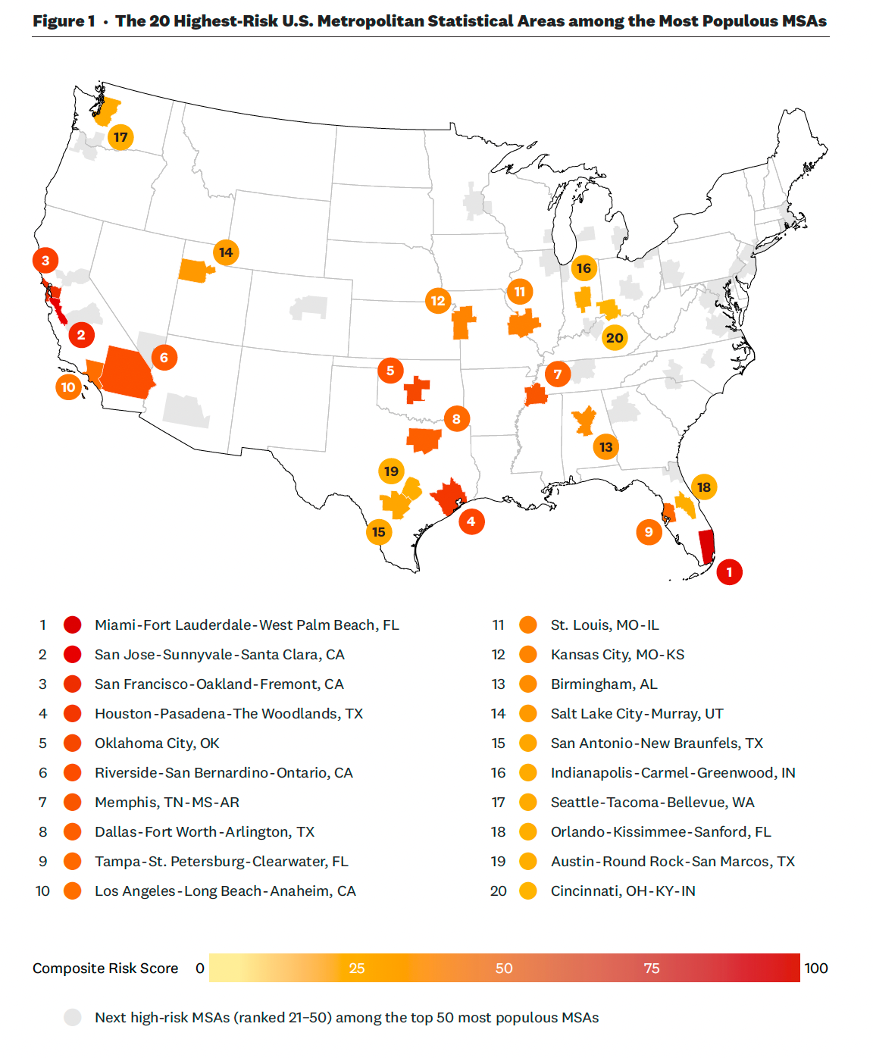
Our report analyzed 60 recent bond offerings from issuers in 20 U.S. metropolitan areas with the highest physical-risk exposure, among the 50 most populated, based on Cotality’s Comprehensive Climate Risk Analytics.
Key findings include:
33% of the sampled bond offerings make no mention of climate or extreme weather risk.
Only 12% of bonds provide the quantitative metrics or targets that help investors evaluate how climate risks are measured and managed, and just 15% disclose who is accountable for managing that risk.
Many municipalities are already investing in resilience but aren't getting credit for it. Issuers taking steps such as relocating wastewater treatment plants out of floodplains often don't reflect that work in their official bond statements, leaving investors unable to price in the risk reduction.
Generic, boilerplate language dominates, even in jurisdictions with well-documented, location-specific hazards. For example, Phoenix, Arizona which faces the highest number of projected annual heatwave days among large U.S. metro areas, made only passing reference to heat mitigation in its 2024 bond offering.
Disclosures look backward rather than forward, even though municipal bonds typically run 20 to 30 years. Issuers frequently detail past disasters but rarely provide forward-looking analysis of future exposure or financial impact.
Bonds facing similar climate risks can receive very different levels of disclosure, even when issued in the same county, creating an inconsistent picture for investors trying to compare risk across issuers.