
The domestic oil and gas industry has boomed over the past two decades, pushing the U.S. into the top spot globally for production. Whatever you think of this drilling bonanza, the war in Iran is revealing an uncomfortable truth: the American economy inexorably tied to volatile international oil markets.
That hurts consumers across the economy, as we’ve seen many times over since the 1970s. The war, and the resulting shipping bottleneck in the Strait of Hormuz, has already cost U.S. consumers more than $52 billion, according to Brown University researchers. That includes a staggering $29 billion in extra gasoline costs paid by Americans — nearly $225 per household.
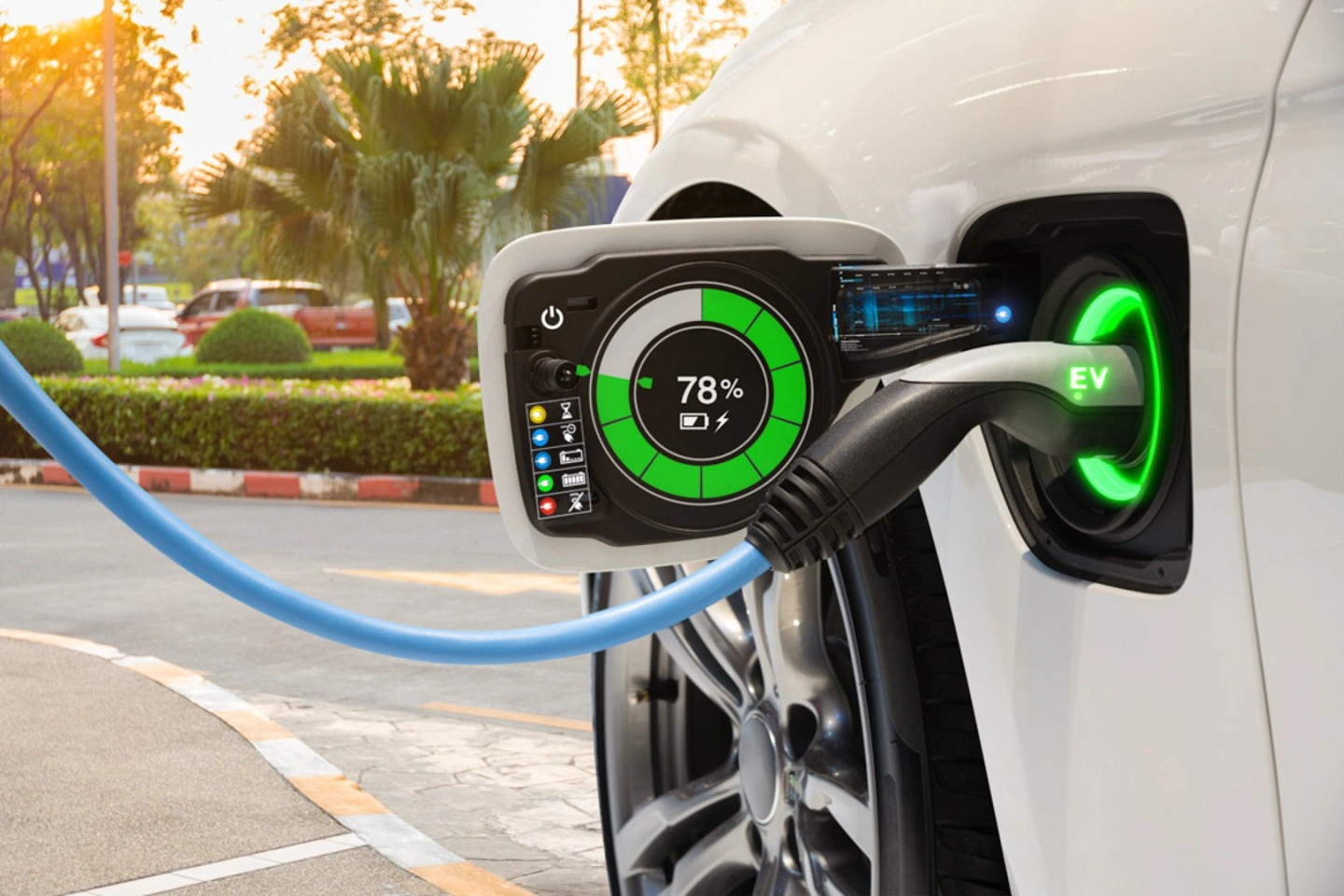
Electric vehicles offer Americans an opportunity to detach from that price shock. But the U.S. House of Representative’s surface transportation reauthorization bill proposes to charge EV owners a punitive $130 annual registration fee. That’s more than the $73 to $89 that conventional car owners pay each year in gas taxes, despite the fact that many states already have an annual EV registration charge.
Lawmakers have already repealed the federal tax credit for EVs. As they decide how to fund our roads and highways in the surface transportation bill, they should be consistent by keeping a level playing field for EVs and gas-powered cars. In other words, Congress should allow consumers to make their own choice, without more government interference.
Thankfully, while the House legislation has moved out of committee, it’s just the starting point. Key senators have already signaled their opposition to the EV fee, and we think there’s a strong case for lawmakers to keep the EV charging programs that are already benefitting their states and districts.
We’ll be making that argument in person on Capitol Hill in the coming weeks alongside our partners at some of the most innovative companies in America’s EV manufacturing industry and supply chain.
It’s important for lawmakers to understand that EVs are competitive for consumers in terms of total cost of ownership, especially when gas prices are high. Charging is cheap, and electricity costs, while rising in many parts of the country, are more stable than the price of gas. With current trends, consumers could save an average of more than $1,200 annually on fuel and maintenance with an EV compared to a gas-powered car.
For businesses, too, electric fleets mean more predictable long-term operational costs. In the trucking industry — a backbone of the U.S. economy — the move towards EVs is well underway. Companies like DHL and Pepsi are already using electric trucks, and costs have dropped steeply in recent years, including with the release of Tesla’s new electric semi-truck.
The light-duty EVs consumers are buying are similarly more affordable than ever. A new Chevy Bolt starts at $29,000, roughly $20,000 below the average price of a new car. EVs are not a luxury item anymore — they make up a significant share of U.S. vehicle sales — and policymakers shouldn’t treat them like one.
Consumers and businesses could get even more bang for their buck with a more fully fleshed out national EV charging system, and there’s already federal money on the table to build it out. More charging could be a boon for rural states that currently lack the infrastructure to get EV drivers over long distances.
Oklahoma, for example, is moving forward with a charging buildout using federal, state, and private dollars. While lawmakers have understandable concerns about overspending, they should keep the charging buildouts that are already underway fully funded in the surface transportation bill.
Meanwhile, Buc-ee's and Pilot Flying J travel centers — two staples of the rural highway landscape — are both rapidly expanding their own networks of EV chargers. These private efforts show that there is pent up consumer appetite for EV infrastructure around the country. Businesses are leading the way, and Congress should follow.
And as policymakers recognize the need for domestic mining and manufacturing to compete with China, here’s another uncomfortable truth: Without a homegrown EV industry, U.S. mines won’t stay open.
Lawmakers have smartly tied EV policies to so-called domestic content provisions that require companies to source materials for batteries and chargers from domestic companies and from strategic allies that don’t face shipping bottlenecks. As a result, businesses are making huge investments to mine and process minerals in the U.S., often in rural states.
That helps us compete with the Chinese critical minerals that have unfairly flooded global markets in recent years, and it means that many of the EVs on our roads are fundamentally a U.S. product. They’re manufactured here, and the materials they need increasingly come from the ground here.
In the absence of explicitly pro-EV policy at the federal level, lawmakers can keep this renewed American mining and manufacturing afloat simply by leaving the EV industry alone and avoiding costly new fees for consumers.
In Asia and Europe, rising oil prices have led to skyrocketing EV sales. Sustained high oil prices could accelerate EV adoption here at home, according to a recent analysis by Woods Mackenzie, and automakers like Hyundai and Lucid continue to invest in U.S. EV and battery supply chains even without the federal tax credit.
With the repeal of EPA's fuel economy standards, drivers currently have fewer protections against price spikes than any time in the last 48 years. At the very least, lawmakers should not erect new barriers for consumers who choose EVs to keep their daily lives affordable.